Showing posts with label Week 12. Show all posts

Thursday, April 16, 2020

Microfiction: Of Dogs and Pigs

25 Word Microfiction: The Guilty Dogs

The poor are condemned to suffering while the affluent are favored and governmentally protected. Why kill the innocent just because the guilty are the rich?


50 Word Microfiction: The Two Pigs

A woman found abandoned piglets and raised them as her own children. When they were to be slaughtered, they saved themselves with wise revelations about love: it was better to die happy and loved than to live miserably in fear. They were not killed, and the King rewarded their wisdom.
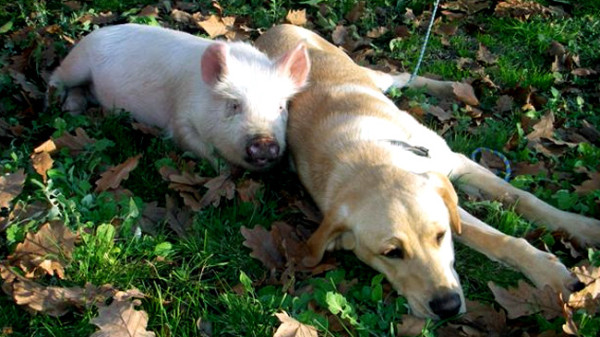
Pig and Dog: Happy Together (Barkpost, link)


Bibliography: Twenty Jataka Tales, by Noor Inayat (link)

Note: I used this week's class sources, one story from each half of Inayat's Jataka tales. The first is about a king's leather chariot straps: they were left out in the rain one night, so when they were nice and soft the palace dogs decided to chew them up. The king knew only that dogs did it, so he ordered all the dogs in the city to be killed, but not the palace dogs. The chief of the city dogs figures out the culprits lived within the palace, and went to the king, appealing for the punishment of those who were actually guilty and about to be overlooked, instead of the death of hundreds of innocents (seven hundred, to be exact.) The 25 word story sums up the spirit of the story, if not the tale itself, and reads a little bit like an anti-capitalism slogan. Honestly, I kept coming up a few words short (because the motto is fairly simple) so I had to do a decent amount of word-shuffling and embellishing.

For the second, I used the 50 word format and was able to tell more of the actual story. The older pig was able to sweet-talk their way out of being slaughtered simply by saying poetic things about "letting love envelope you and ease your suffering," and the King brought them into his castle and gave them jewels and perfume. The older pig also became the official settler of disputes in the kingdom, and they lived happily in the palace until the king died. This one was much easier to write because of the added leeway of a higher word count. This one I wrote up as the words came to me and only had to revise once, as opposed to the many revisions of the first story. I really like the microfiction format in general, because instead of telling a whole story you have to really think about...almost, how not to tell a story, but still get the point across.

Reading Notes: Inayat's Twenty Jataka Tales, Part B


  • The Two Pigs
    • Two little pigs were abandoned (presumably) at the side of a village road
    • A little old woman comes along and sees them, and tells them to come into her cotton basket and come home with her; she will be their mother
      • She laughed and smiled and was happy as could be, and named the elder one Mahatundila and the younger Cullatundila
        • Years passed and the little old woman fed and loved the two pigs as her own children
    • But one day a big feast was held in the village nearby
      • The men were all very drunk and had eaten all the meat in the village, and were unsatisfied and wanted more
        • They go to the little old woman and offer her money for her pigs. She says no; does one give away one's children for money?
      • The men made her drink, and asked her again for the pigs when she was drunk
        • So she says, I cannot give you Mahat, but take Culla.
          • She puts rice in the little bowl at the door and calls for Culla.
    • Mahat hears the call and thinks, Mother has never called Culla first; she always calls me first. What danger is upon us today?
      • Culla goes to the old woman, but sees the bowl and the men with ropes, and he turns back and goes to Mahat, trembling with fear, and explains
        • Mahat tells him not to grieve, that for this day they have been reared and fed, and tells him to go answer Mother's call
    • Moved by the tears in his brother's eyes, Mahat says this: "Bathe in the pool of water as on a bright feast-day, and you shall find a perfume that never fades away."
      • As he spoke all the world changed. The little flowers opened up their hearts to hear, the trees bent over, the wind became silent, and the birds tarried in their flight. The men and old woman were instantly sobered and dropped the ropes. His voice reached into the city and was heard by thousands of citizens, rich and poor. All were moved to tears and drawn towards the little house where they crowded around
    • But Culla, not being a very bright pig, was confused. 
      • He asks why his brother spoke those words, as they had never bathed in a pool of water nor do they find perfume. So he asks what they are
        • Mahat answers, and the great crowd was silent.
          • "The pool of water is love, and love is the fragrance that never fades away. Be not sad brother, be not sad to leave this world. Many stay and are unhappy, many leave and joy is theirs."
      • The sweet voice reaches even to the king, who cries as well.
      • The crowd waved their hands and uttered loud and joyful cries. They then brought the pigs to the palace
        • The King demands that the brothers be bathed in the sweetest perfume and clad in silken garments. They were given jewels to hang around their necks, and dwelt with the King in the palace
          • All disputes were brought to Mahat, the blessed one, and settled by him
    • Finally, in fullness of years, the King died and Mahat and Culla left the city to dwell in the forest, to the great grief of the people of Benares, who wept as they departed
      • However, the reign of justice endured, and the people continued to dwell together in amity
        • And all lived happily ever after.
  • Bibliography: Twenty Jataka Tales by Noor Inayat (link)
Two Pigs (Ruben van Kuik, link)

Reading Notes: Inayat's Twenty Jataka Tales Part A


  • The Guilty Dogs
    • One day, a king drove through the city in his chariot drawn by 6 white horses. When he returned at nightfall, the horses were taken to the stable but the chariot and harnesses were left in the courtyard
      • When everyone was asleep in the palace, it started to rain
    • The palace dogs decided it was their time to have fun.
      • They saw the leather harnesses, wet and softened by the rain, and bit and gnawed at them all night, then slipped away before dawn
    • The stablemen see that the straps of the royal chariot have been eaten and destroyed, and with "trembling hearts" go to tell the King
      • The King rose up in a fury and commanded every dog in the city to be killed
        • The 700 dogs in the city hear the order and all cried. But their Chief dog loved and protected them, and they set out to find him
          • They tell him of the danger
          • He thinks to himself that it is impossible for any city dog to enter the palace gates, so it must have been the palace dogs who destroyed the harnesses
            • He decides to show the guilty dogs to the King to save the others
    • The chief goes into the city alone. At every step men were standing ready to kill him, bu his eyes were so full of love that they didn't dare touch him
      • He enters the hall of justice where the King sat on his throne with his courtiers all around, and all remained silent.
      • After some time the chief spoke, and asked if it was the King's command that all the dogs of the city be killed
        • The King said yes. The Chief asks them what they have done, and the King tells him about the leather harnesses.
        • The Chief asks which dogs have done the harm; the King responds that he does not know so he ordered them all to be killed
        • The Chief clarified if all were to die, or if some dogs would be allowed to live; the king responds that the royal dogs only would be allowed to live
      • The chief gently asks if the King's command is just...why should the dogs of the palace be innocent and the dogs of the city judged guilty? 
        • The ones he favored are saved and the ones he doesn't know are to be killed. Where's the justice?
      • The King thinks for a minute and asks who the guilty ones are; the chief responds that the royal dogs are guilty.
        • The King asks for proof, and the chief tells him to bring the royal dogs to the hall and feed them kusa grass and buttermilk...at which the leather scraps "came out of their mouths"
      • The King concedes that the Chief's words are true, and declares he will not forget him. He then commands that all the dogs of the city are given rich food and royal care, and they all lived happily ever after
  • Bibliography: Twenty Jataka Tales, by Noor Inayat (link)

The Royal Dogs, Probably (Frank Kovalchek, link)